

Key Takeaways:
With storm season on the way, as a Florida homeowner, you should make sure to protect your outdoor AC unit properly. Clear debris, trim overhanging branches, and make sure your unit is properly secured. Turn it off during the storm and inspect for damage afterwards, and your HVAC system should come through hurricane season just fine.
Introduction
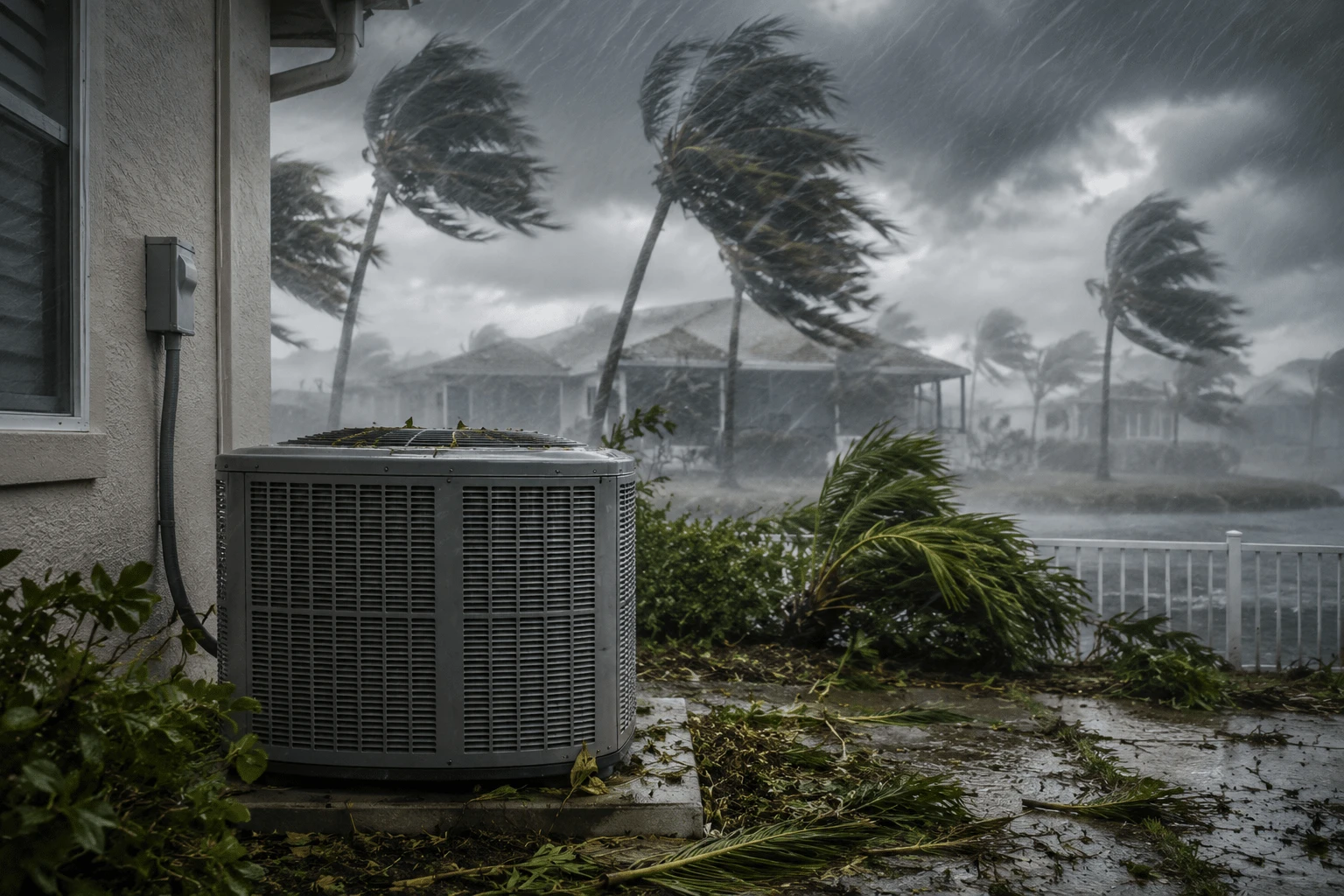
Hurricane season is on the way. The last thing you want is for a storm to damage your AC system, and your outdoor unit is vulnerable to wind, rain, and debris. Communities in Florida, like Cocoa Beach, often experience the brunt of the storms.
So, how can you prepare for hurricane season and protect your outdoor AC unit from damage?
Trim Overhanging Branches
Trim any branches that overhang your unit. You should do this regularly, and trimming back branches from your home can also prevent damage to your roof. Smaller branches can land on the unit outside and get caught in the fan, too, so check smaller trees, too.
Clear Your Unit of Debris
Regularly check the area around your outdoor unit and remove anything littering the area. This can include leaves, branches, or loose items, such as your child’s or dog’s toys. Even a small piece of debris can cause significant damage.
Check again if a storm is predicted, and secure all loose items and furniture inside. Move potted plants away from your AC unit and position them where they are less likely to be hit by wind. Also, make sure your gutters and downspouts are clear.
Secure and Protect Your Outdoor AC Unit
Florida’s building code requires a slab support or hurricane pad to safeguard your unit. Any cooling systems on higher floors must be tied down against hurricane-force winds.
You might also consider installing a unit cage, which shields your unit from wind and prevents debris from contacting it while still providing access for maintenance. Cages can also help reduce theft and vandalism. Security cages that just consist of bars over the unit won’t help.
If you don’t have a cage, then cover the unit with a sturdy tarp or plywood before the storm hits. Don’t use plastic or shrink wrap, which traps moisture. Use stainless steel hardware – it costs more but doesn’t rust and is by far the best material for Florida’s damp and humid conditions.
Pre-Cool Your Home
If you’re riding out the storm, pre-cool your home before it hits. If the power goes out, you’ll stay comfortable. Close curtains, blinds, and storm shutters to keep the cold air inside to help keep your home cooler for longer if the power goes out.
Turn Your AC Off
Power off the electricity to your AC (or heat pump) before the storm hits or when you evacuate. Even with an HVAC storm surge protector (which we recommend), lightning can still damage your unit.
You should shut off the power at the circuit breaker and turn the thermostat off. Turning the thermostat off on its own does not keep the system from power surges. If you are evacuating, consider turning off the main power to your home to help protect everything from power surges.
Absolutely do not run the AC system during a hurricane. This can easily result in damage to your system from debris being sucked in.
Inspect After the Storm
After the storm, or when you get back, inspect the system before turning it back on, no matter how hot things are in your home. If it has any damage, turning it on will make it worse.
However, do turn it on as soon as it seems safe. If in doubt, call an expert HVAC technician to do a proper inspection.
Schedule a Pre-Storm Inspection
If you haven’t yet, schedule a professional inspection of your HVAC system. We can fix problems that could lead to AC failure on a hot day and check for issues that could cause damage during a storm.
Contact Kabran to schedule your HVAC inspection today.